RSS

The Agreement That Makes You a Client

I'm writing this because of a question I was asked recently, and because it was a good one.

I put a representation agreement in front of someone. Instead of signing it, they read it - and then went through it with me. Not vaguely. Clause by clause. What does the term actually commit us to. What happens if this doesn't work out between us. What is a holdover period and why is it that long?

I had answers for all of it. What stayed with me afterward was that not many had made me say those answers out loud before. A document I hand people routinely is not always once been read back to me by the person signing it.

They were right to ask, and most people don't. I don't think that's their fault. The agreement usually comes out at the end of a meeting, when everyone's keen to go look at houses, so it gets summarized rather than read. I've done that. I won't again.

So here is what that page actually is, said properly.

Start with the part almost nobody knows. Under Ontario's Trust in Real Estate Services Act, a representation agreement can be written, oral, or implied. RECO's guidance is blunt about it: providing services or representation to someone in the absence of a written agreement gives rise to a representation agreement anyway. The signature isn't what creates the relationship. The relationship creates itself the moment an agent starts exercising judgment on your behalf - advising, advocating, telling you what a place is worth and what to do about it.

So the question was never whether you and your agent have an agreement. It's whether yours is written down, or left to two people's memories.

What has to be in it. RECO sets the required content, and it's worth reading as a buyer, because nearly every line on that list is a limit on the agent. One effective date and one expiry date - the expiry displayed prominently on the first page, with your initials beside it. A complete description of the services you're getting. The method used to determine what's payable to the brokerage, agreed in writing before any work begins. Any circumstance in which that amount could change, and exactly how. How it gets paid. And the terms for ending it, including what happens to your obligations if you do.

What you get back is the part that actually matters. As a client, I owe you undivided loyalty, confidentiality, full disclosure, and the duty to keep you advised of every significant step I take on your behalf. Without an agreement, you're a self-represented party. I can hand you a document. I can answer a question of fact. I can't tell you what to offer, and I can't tell you when to walk away - which is probably one the main things you were ever really hoping to get advise on.

The clause to ask about out loud. Holdover. It isn't required by law, and RECO names it as one of the biggest sources of consumer complaints. It says that if you buy a property I introduced you to within a set window after the agreement ends, the fee is still owed. That's not a trap — it's there to stop the obvious end-run. But you should hear it explained before you sign, not discover it after.

And here's the part worth taking from that conversation: the terms of the agreement are a conversation, not a decree. Some of what I was asked for I couldn't do, and I said why. Some of it was fair, and I changed it. That's how it's supposed to go.

The agreement isn't a leash. It's the only page in the whole transaction that sets out, in writing, what I owe you. Sign one with someone who reads it to you first — and who doesn't flinch when you ask.

Buying a home in Niagara · Working with a REALTOR® under TRESA

#searchniagara


And yes — Ontario courts treat these as real contracts. They've enforced a written agreement against a buyer who was told it was "just a formality" (Sun v. Mani, 2024). They've upheld one against a buyer who said he'd verbally cancelled it, all the way to the Court of Appeal (Apex Results Realty Inc. v. Zaman, 2018 ONSC 7387, aff'd 2019 ONCA 766). They've even awarded a commission where nothing was ever signed, because the work had been done and the buyer benefited from cutting the agent out (Homelife Maple Realty Inc. v. Singh, 2021 ONSC 4743). And they've thrown one out entirely where the agent emailed a 19-page package at dinnertime and never explained it to the person who signed it (Sutton Group-Admiral Realty Inc. v. Taborovska, 2021 ONSC 2837). The pattern is consistent. These agreements hold when they're explained, and fail when they're not.


Ved Bhat is a REALTOR® with Royal LePage NRC Realty, Brokerage, serving the Niagara Region. This post is general information, not legal advice.

Read

Thirty-Two Coffee Shops, Two Towns Still Missing

I've written before about why I end up in coffee shops — I've always worked out of them, and a decent coffee with some background noise is where the thinking actually happens. What I hadn't done was put the whole list on a map.

Now I have. Thirty-two shops. Ten towns. And two towns that have never once seen me walk in.

I expected the map to be a list with pins on it. It turned out to say something.

Pelham and St. Catharines are tied at eight each. That's the part that stopped me. St. Catharines has something like eight times the population of Pelham, and the same number of independent coffee shops made my list. Eight, in a town of about eighteen thousand people. That is not normal, and if you live here you already know it — it's why the drive along Highway 20 takes longer than it should.

Niagara Falls has exactly one. Hummingbird Coffee Co on Portage. I refuse to believe that's the whole story in a city that size, and I suspect it says more about where my work takes me than about Niagara Falls.

Wainfleet and West Lincoln are blank. Not "few." Blank. Two of the twelve municipalities in this region and I have nothing on the list for either.

Then there are the ones that surprised me by clustering. Fort Erie has three, spread from Ridge Road to the beach. Thorold has three within a few blocks of each other on Front Street. The canal towns punch above their weight.

I'll say the real-estate part carefully, because I don't think a café decides where anyone buys. But when people describe loving where they live, they tend to describe places, not square footage — the walk, the regular, the person behind the counter who knows the order. A town with three independent shops within walking distance of each other has a downtown that's actually working. A town with none may just have nobody who's tried yet. Both are worth knowing before you buy there.

So here's the ask, and it's the same one that's on the map.

Which one am I missing? Text me the name and I'll drive out and try it — and if it's new to me, it goes on the list and the map gets redrawn. There's a gift card in it for you, to one of the shops on there.

Wainfleet and West Lincoln, especially. Somebody fix this for me.

The full list, town by town, with addresses

Text 365.855.6477, or find me on Instagram @ved.bhat.niagara — I post reels from a lot of these.

#searchniagara

Read

The Lease Clauses That Don't Actually Work in Ontario

In my last post I wrote about the paperwork a tenant signs, and how much of it disappears when someone rents direct. This is the other side of that table.

Most first-time landlords I meet are careful people. They've thought about what could go wrong, and they've written protections into the lease to cover it. The problem is that in Ontario, several of the most common protections are void the moment they're signed. Not weak. Not hard to enforce. Void — as if the line were never there.

Here are the five I see most.

"No pets." Unenforceable in Ontario residential tenancies, full stop. A landlord can decline an applicant before a tenancy exists, and can act after the fact if an animal genuinely damages the unit or disturbs others. But the clause itself does nothing.

A damage or security deposit. There is no such thing here. A landlord may collect a rent deposit — last month's rent, and nothing more — plus a key deposit refundable up to the replacement cost. That rent deposit also earns interest annually at the guideline rate, which almost nobody pays without being asked.

A minimum income, or a rent-to-income ratio. The "rent shouldn't exceed 30% of income" rule you've heard quoted is not a screening standard you're allowed to apply. Under O. Reg. 290/98 a landlord may ask for income information, credit checks, credit references and rental history — but income can only be considered together with everything else, and minimum-income criteria and rent-to-income ratios are specifically prohibited.

"The lease ends June 30 and they move out." It doesn't and they don't. When a fixed term expires, the tenancy automatically continues month to month on the same terms. Ending it requires a ground and a process, not a date on a page.

A rent increase whenever it feels right. Twelve months between increases, ninety days' written notice on the Board's form, and for 2026 the guideline is 2.1%. Units first occupied for residential purposes after November 15, 2018 are exempt from the guideline — but not from the notice and timing rules.

One more that isn't a clause but costs the most: not using the Ontario Standard Lease. If a tenant requests it in writing and doesn't receive it within 21 days, they can withhold a month's rent.

So what actually protects a landlord?

Not the lease. The screening. A properly read application — Form 410, real ID, verified income, a full credit report, and references from both the previous and the current landlord — does more for you than any clause you could write. The clause is what you reach for after it's gone wrong. The screening is what stops it.

If you're leasing out a Niagara property for the first time, I've written the whole road out — nine steps, from confirming you can legally lease it through to running it like an asset after move-in.

The residential landlord roadmap

#searchniagara

Read

The Paperwork Nobody Warns Renters About

People assume renting is the light version of buying. A viewing, a handshake, a cheque, keys by Friday.

It's backwards. A represented tenant signs and assembles more documents than a represented buyer — three or four more, every time.

A buyer's file runs to about eight or nine. The RECO Information Guide and acknowledgement, a representation agreement, the Confirmation of Co-operation and Representation, two FINTRAC records, the Agreement of Purchase and Sale with schedules, then amendments and waivers as conditions clear. (Their lawyer handles title, mortgage and closing after that — a separate stack.)

A tenant's file runs to about eleven or twelve. Same front end — guide, representation agreement, confirmation form. Then two things a buyer never touches.

First, the qualification package. A landlord doesn't lend you money, so they screen you themselves: Rental Application (Form 410), credit consent and report, employment letter, pay stubs, ID, references.

Second — and this is the one nobody expects — not one contract, but two. The Agreement to Lease is the negotiation: term, rent, parking, appliances, utilities, pets. The Ontario Standard Lease is the tenancy itself, mandated by the province. Add a guarantor agreement where credit needs support, deposit direction for first and last, and in a condo, the rules acknowledgement, insurance proof and key release.

Now compare that to going direct

A landlord or property management company hands you two documents, maybe three. An application, a credit consent, a lease.

That isn't less work. It's the same transaction with nobody on your side doing it.

Nobody negotiating the term, the parking, the pet clause or the appliance list before they're locked into a contract you'll live inside for a year. Nobody checking that what you're signing is actually the Standard Lease. Nobody reading the extra terms stapled to the back and telling you which ones are unenforceable — because plenty of them are. A lease clause that contradicts the Residential Tenancies Act is void whether or not you signed it.

Nobody mentioning that "first, last, and a damage deposit" isn't a thing in Ontario.

You still sign. You just sign alone.

And here's the part that surprises people: in most residential lease deals in this market, the landlord pays the commission. You get the eleven-document version, done properly, and it costs you nothing.

If you're renting in Niagara

Know where you stand before you fall in love with a place. My pre-screening form walks you through the process and covers income, credit, occupancy, parking and move-in timing — about five minutes, so we're not scrambling when the right listing comes up.

Start here

General information, not legal advice. For advice on a specific tenancy, speak with a lawyer or contact the Landlord and Tenant Board.

Read

Niagara Real Estate in July 2026: What It Actually Means for Buyers and Sellers

Every month, a stack of market stats lands in my inbox. Sales counts, average prices, days on market, months of inventory. Useful numbers if you already know how to read them. Mostly meaningless if you don't.

So instead of just handing you the spreadsheet, here's what July actually meant if you're the one buying or selling a home in Niagara right now.

If you're buying.

You have more room than you did a couple of years ago. Months of inventory sat at 5 in July, the same as June, which is generally considered a balanced market, not one tilted hard toward sellers. The clearest sign of that: sales over $1 million are down almost 29% year over year. The upper end of the market has cooled the most, which means if you're shopping in that range especially, you have real leverage to negotiate on price, closing terms, or conditions.

That doesn't mean lowball offers on everything you see. Well-priced homes are still moving in six weeks and still closing near asking. But you're no longer walking into a bidding war on every listing, and that changes how you should approach an offer.

If you're selling.

New listings dropped almost 7% from June to July, which works in your favour if your home is priced and presented correctly, there's a little less competing inventory pulling buyer attention away from you. But the flip side of a calmer market is that overpricing gets punished faster than it did in 2021 or 2022. Buyers have more to compare you against, and they're taking their time.

The homes still selling at 97% of asking in six weeks aren't lucky. They're priced to where the market actually is today, not where it was two years ago.

The bigger picture.

Zoom out and Niagara's average sale price has come down from its 2023 peak of roughly $791,000 to around $651,000 year-to-date in 2026. That's not a crash, it's a correction back toward a more sustainable pace after a genuinely unusual few years. If you bought at the peak, your equity story looks different than it did in 2023. If you're buying now, you're stepping into a market that's behaving more normally than it has in years.

Want the monthly version in 60 seconds?

I'm starting a new series called Stats in 60 Seconds, a quick monthly video breaking down exactly what's happening in the Niagara market, translated into what it means for you instead of a wall of numbers. First episode covers July. Follow along, and if you want to talk specifics about your street or your price point, send me a message any time.

#searchniagara

Read

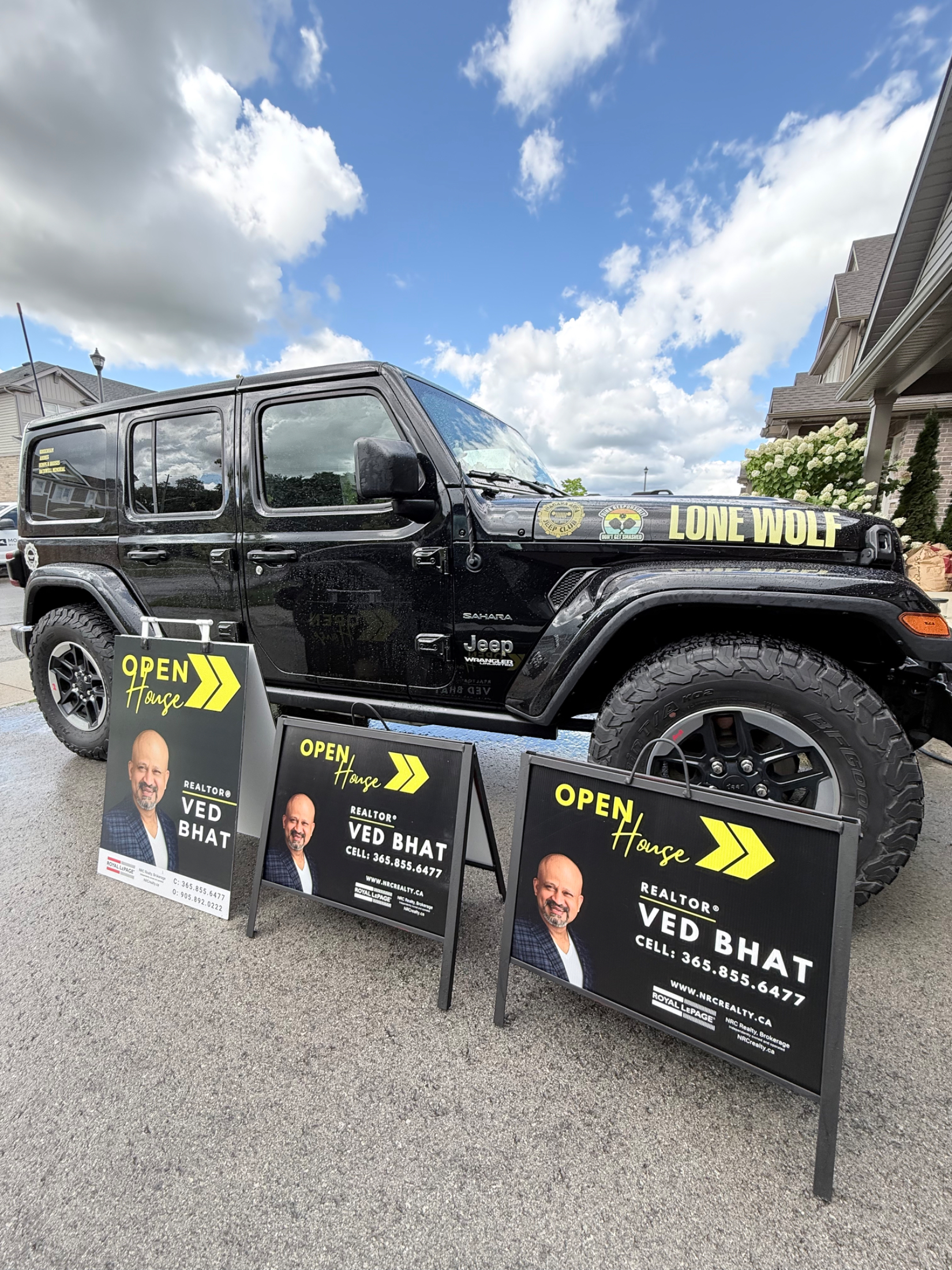
How a Jeep Club Became Part of My Niagara Story

People often ask what brought me to Niagara. The answer isn't as simple as a job opportunity, a house, or a change of scenery. In many ways, the Niagara Area Jeep Club was part of the journey.

I moved here many years ago and long before that, I was already spending a lot of time in Niagara. After moving to Ontario from Alberta, I would often ride my motorcycle down to the Niagara Region on summer weekends. The Niagara Parkway became one of my favourite riding roads, and I enjoyed exploring the different communities, waterfronts, cafés, pubs, and small towns throughout the region.

I had always enjoyed living close to the water. At the time, I was living in Etobicoke near Lake Ontario, and I liked having the lake nearby. So when I started thinking about moving out of the GTA, Niagara was a natural place to consider.

The attractive home prices definitely caught my attention, but it was more than that. I liked the pace of life. Things felt calmer. The communities felt less densely populated. There was more green space, more nature, and a little more room to breathe.

Around the same time, my neighbours in Etobicoke, Bar and Rony, had already made the move to Niagara. They became Jeep owners and were entrepreneurs, and I watched them build a life here. Today, many people in Niagara know Bar through The Baking Bar in Fonthill. Rony is one of those people who always seems to be building, fixing, or creating something, with a real talent for woodworking and hands-on projects.

They were also connected to the Niagara Area Jeep Club which is how I first learned about it. They introduced me to the Niagara jeep Club through its Jeep Fest. In 2022, I volunteered at Jeep Fest and got my first taste of the club.

The Niagara Region already reminded me a lot of my hometown of Calgary. I had always appreciated the connection to nature, the outdoor lifestyle, and the friendships I built in Alberta. Niagara gave me some of that same feeling.

When I started looking at homes, my search began in Grimsby along the lake. From there, I slowly worked my way inland as I explored different communities across Niagara. Eventually, I found myself in Fonthill and came across a house that felt right.

The price certainly didn't hurt either. What I was able to buy in Fonthill would have been very difficult, if not impossible, for me to find in much of the GTA.

Not long after, I made the move. Within a week of moving to Niagara, I attended my first Niagara Area Jeep Club meet at Mossimo’s Pizza on Highway 20 in Fonthill.

From there, I joined five or six off-roading trips and met a lot of people through the club. Some became friends, and many became familiar faces around the region.

What I quickly learned is that the Niagara Area Jeep Club is about much more than off-roading. Members get together regularly for weekly meets, social events, convoys, charity initiatives, and trips to other Jeep events throughout Southern Ontario. The club also organizes its own trail rides and off-road adventures.

One thing I always appreciated was how seriously safety was taken. The trail guides are experienced, the trips are well organized, and there is a strong focus on making sure people don't take unnecessary risks. The safety of drivers, passengers, and vehicles always comes first.

Recently, the club had a large group up in Minden, for their season opener run with roughly 25 to 30 Jeeps exploring the trails together. Trail names such as Scotchline, Gooderham are words only the offer-roaders recognize

If you own a Jeep and you're looking for a community, I'd encourage you to check them out. There is no formal sign-up ritual. Just show up to one of the weekly meets, introduce yourself, talk Jeeps, and meet some people. If you enjoy it, join an event or an off-road trip and see where it takes you. And if off-roading isn't your thing, that's perfectly fine too.Don't worry about being called a pavement princess.

Truth be told, I've become a bit of a pavement princess myself these days. My work keeps me mostly on the road rather than on the trails.

Still, I'm grateful for the role the Niagara Area Jeep Club played in my life.

It introduced me to a community, helped me meet people, and became part of the story of how Niagara eventually became home.

Read

Community, Connection, and Cornhole at Kinetic Synergy

Last Sunday, I had the opportunity to attend Kinetic Synergy's annual Cornhole Tournament, and it turned out to be much more than a friendly competition.

The afternoon brought together members, friends, and families for a few hours of laughter, conversation, food, and community. While the cornhole tournament provided plenty of entertainment, the real highlight was seeing people connect outside the gym and yoga studio environment.

There was no shortage of great food throughout the day. One of the standout treats was homemade ice cream brought by a member, which quickly became a crowd favourite on a warm summer afternoon. Between the food, friendly competition, and relaxed atmosphere, it was easy to see why this event has become a tradition.

What stood out most was the sense of belonging. In a world where many people struggle to find meaningful connections, events like this remind us that fitness centres can be about much more than exercise. They can become places where friendships are built and communities grow.

For me personally, Kinetic Synergy has been an important part of my wellness journey.You can watch my reel here about how Yoga and Real Estate make sense to me. 

Like many people, I originally came for the physical benefits. Over time, I discovered that the value extends far beyond fitness. Through yoga and regular workouts, I've experienced improvements in flexibility, strength, balance, and overall well-being. More importantly, I've found a welcoming environment filled with supportive instructors and members who genuinely care about one another's success.

The yoga program has been particularly meaningful. What started as a way to improve mobility, (for pickleball of course:))  and reduce stress has become an important part of maintaining balance in my life. The practice encourages you to slow down, focus on the present moment, and reconnect with yourself in ways that are often overlooked in our busy schedules.

Kinetic Synergy has created something special. It's a place where people of different ages, fitness levels, and backgrounds come together with a common goal of improving their health while supporting one another along the way.

The annual Cornhole Tournament was a great reminder that community isn't built during a single event. It's built over time through shared experiences, encouragement, and the relationships that develop when people come together consistently.

Thank you to everyone who helped organize the event and to all those who attended. It was a fantastic afternoon, and I'm already looking forward to next year's tournament.

If you're looking for a fitness and wellness community in Niagara, Kinetic Synergy is well worth checking out.

Read

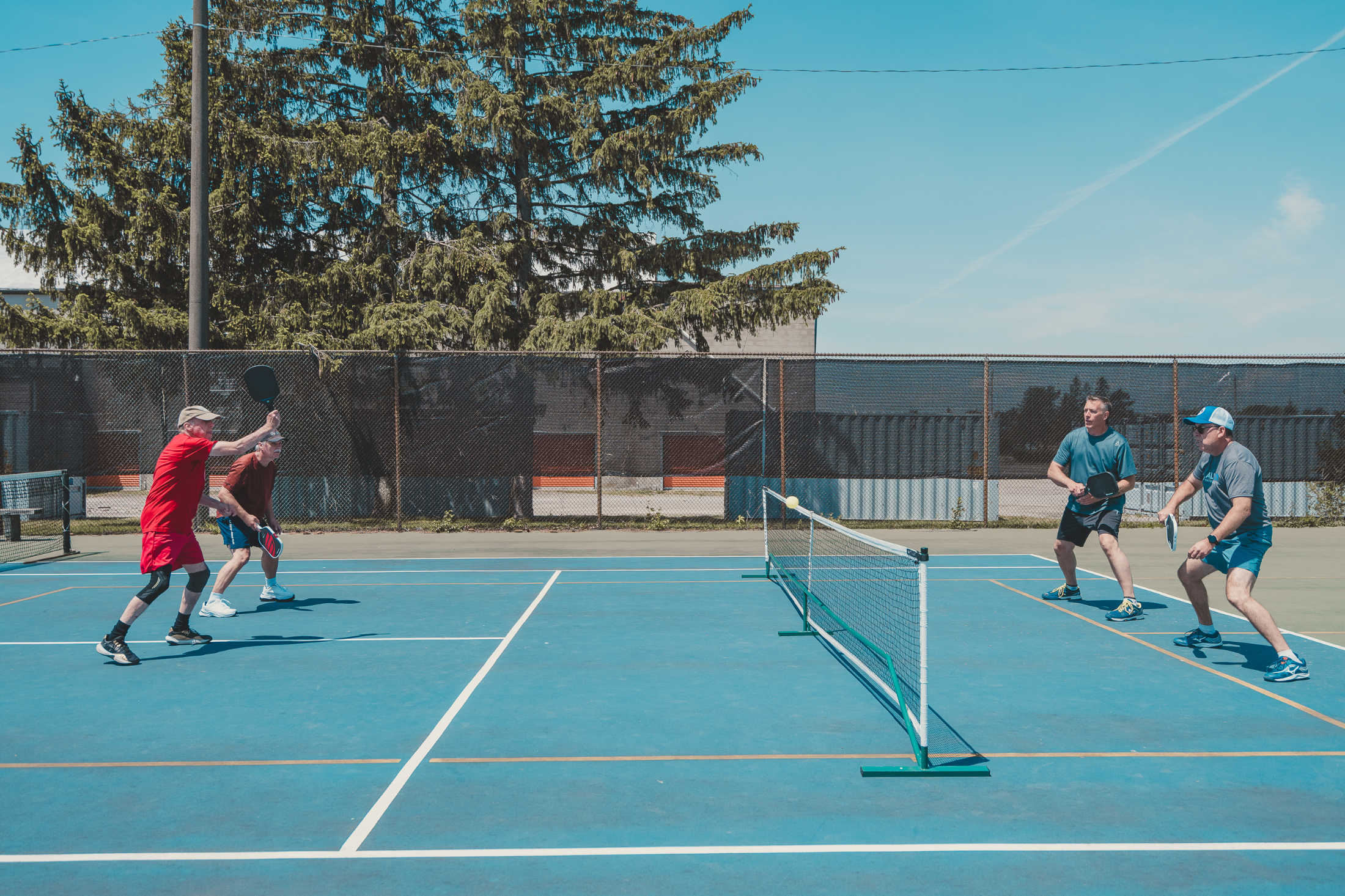
Elevate Your Game in Niagara: Clinics and lessons with Total BS Pickleball

Our pickleball clinics are a no BS game-changer for anyone looking to sharpen their skills and deepen their understanding of the sport. Designed for the beginner and intermediate player these sessions focus on everything from foundational techniques to advanced strategies, giving you the tools you need to play more effectively.

Total BS Pickleball offers private, 2 v 2 and 3 v 1 lessons and are currently partnering with the Town of Lincoln for pickleball clinics.

We have also hosted mini tournaments, king of the court and themed events where new learned skills are put to the test.

We can be found at www.totalbspickleball.com 

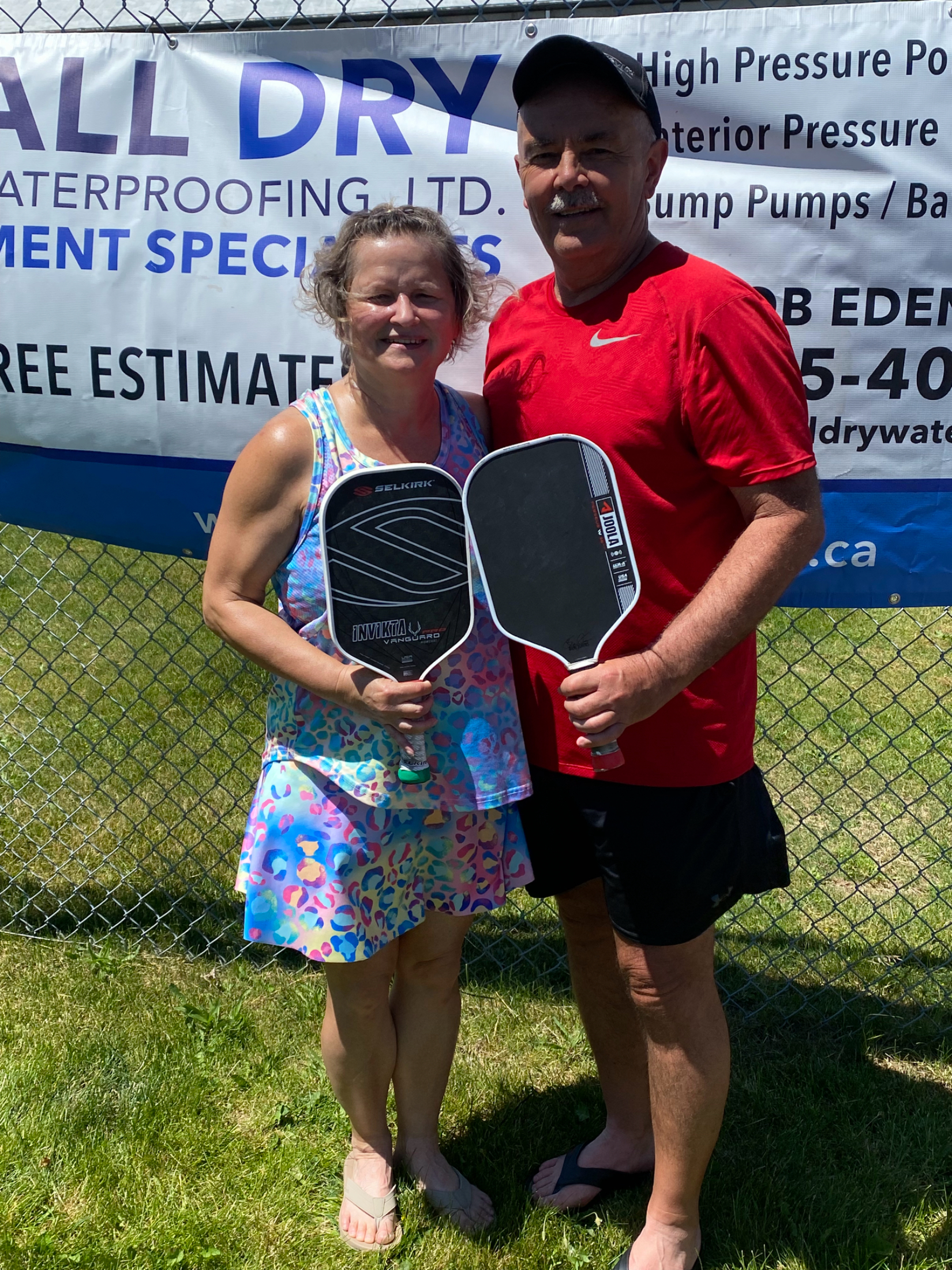
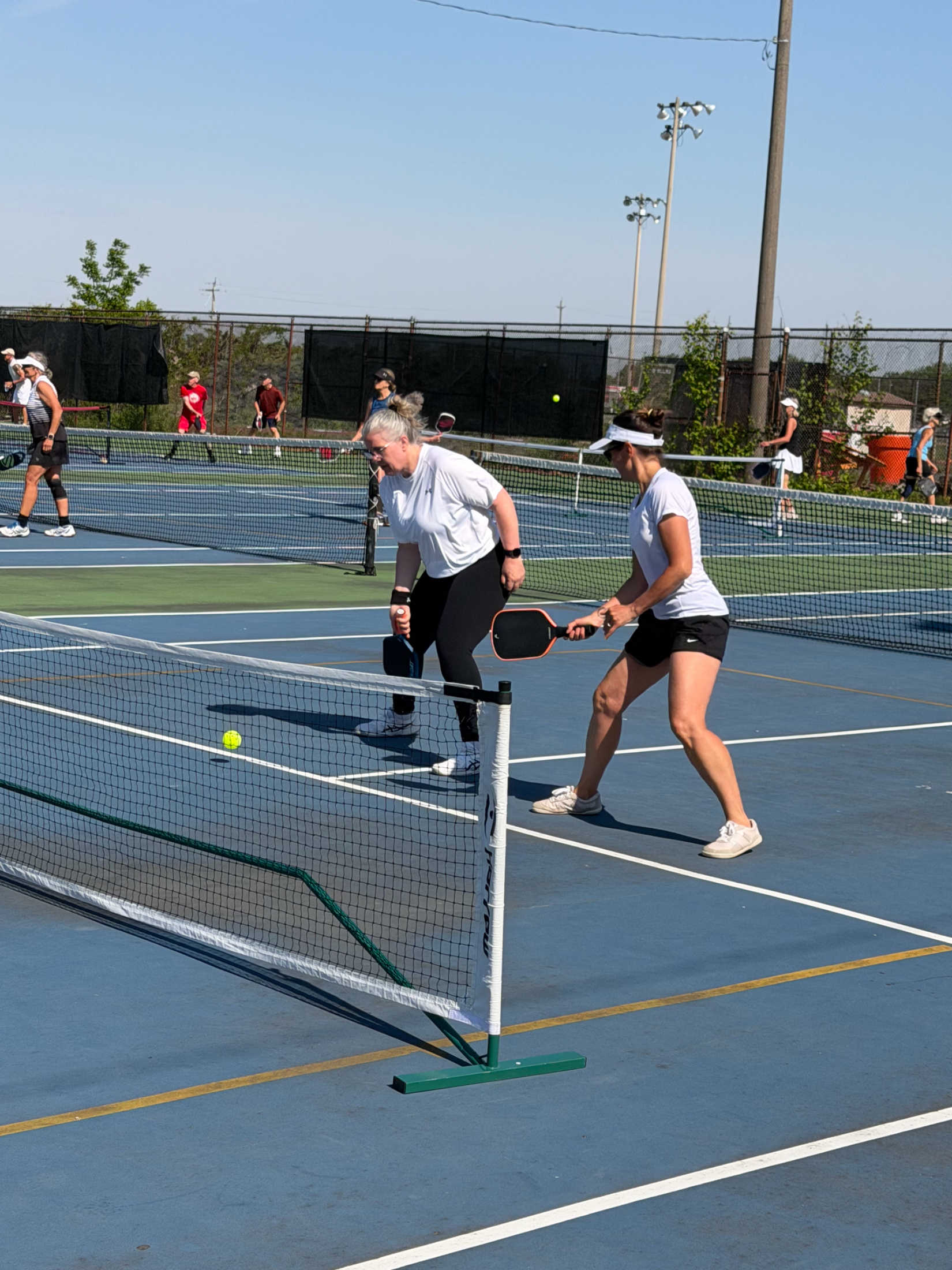
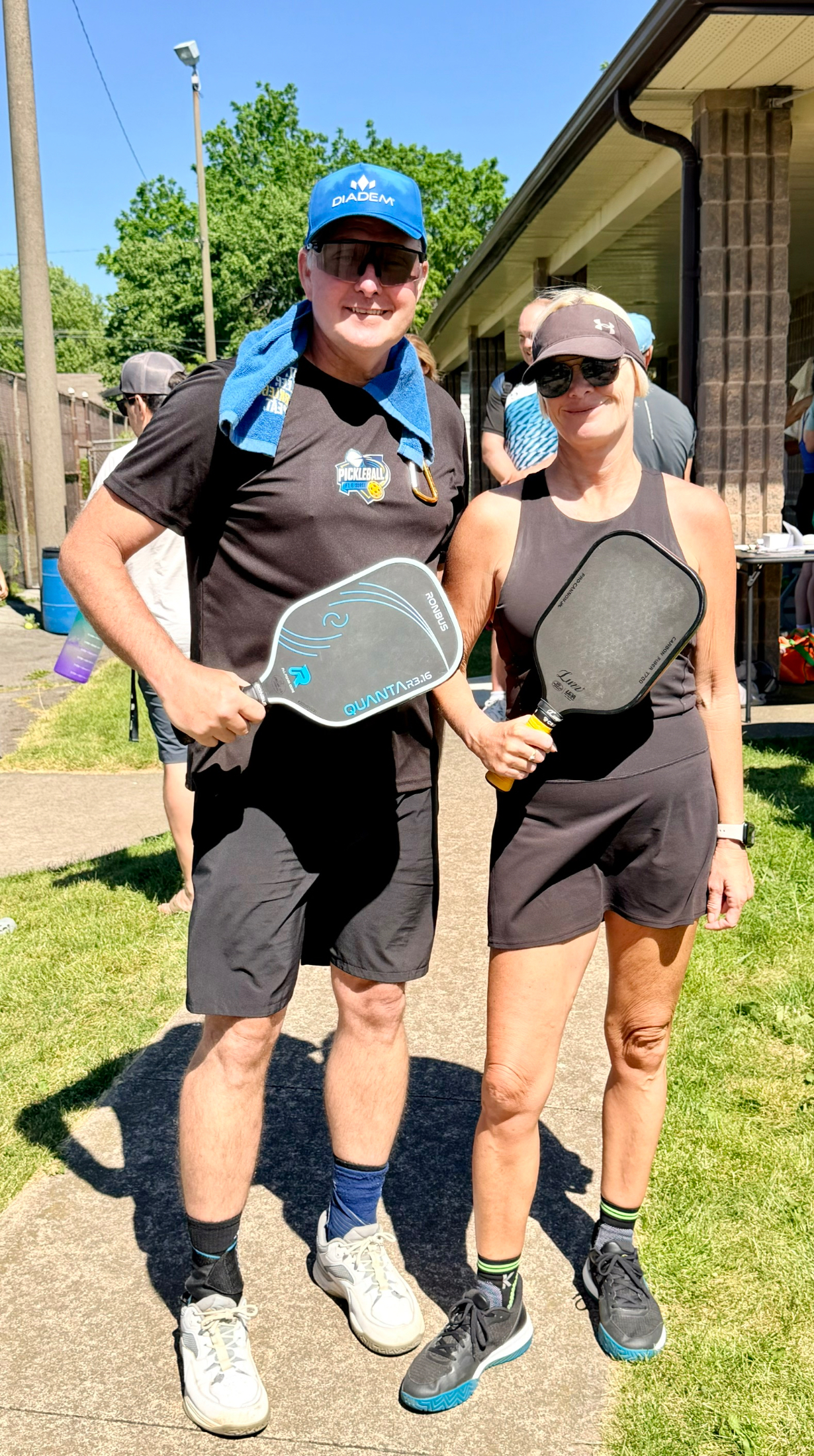
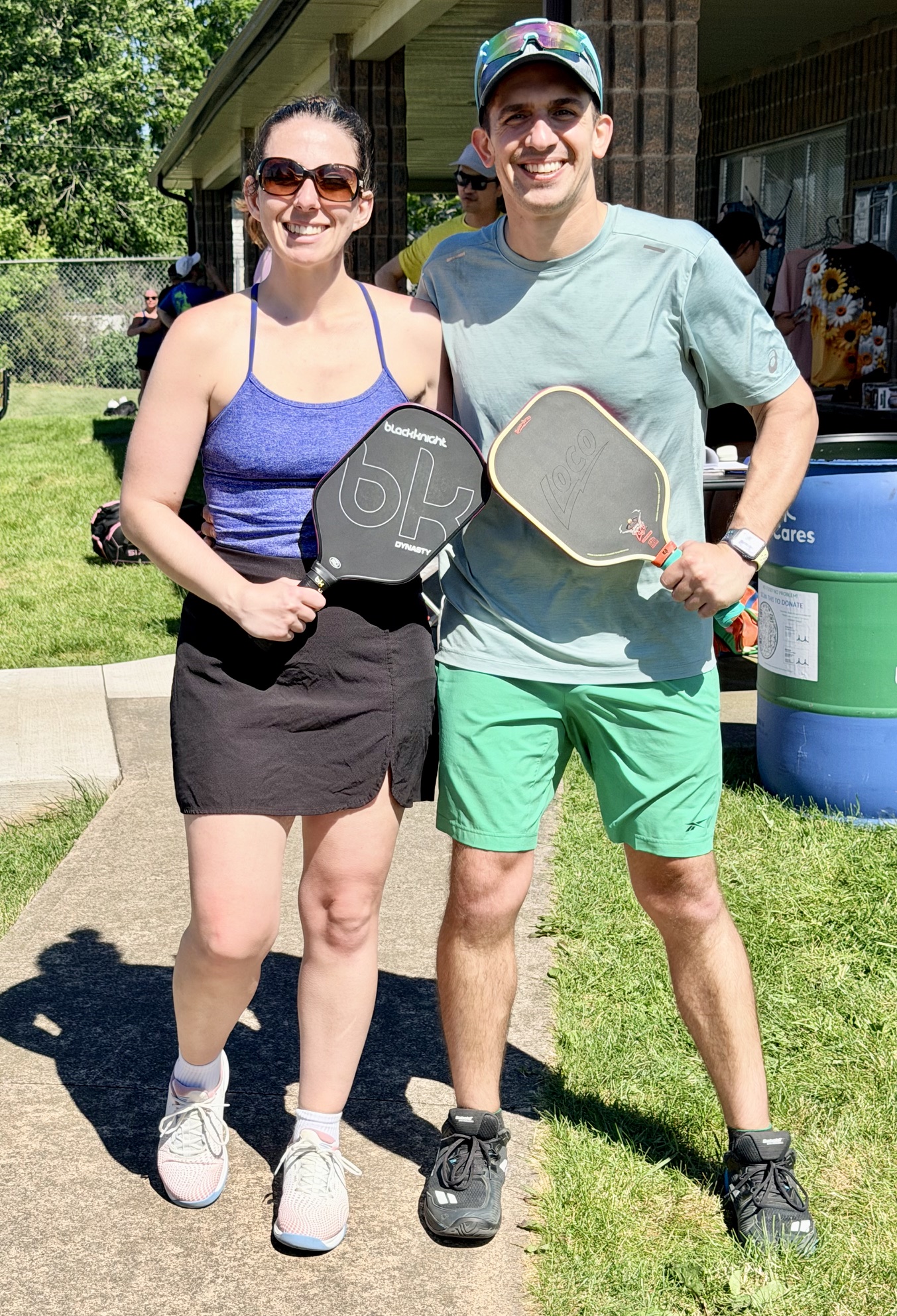
Here are some photos from recent events/ clinics.

Read

Learning, Playing, and Growing in Niagara: Pickleball  Pro Tips # 5

Adam’s Pro Tip#5: STOP RUSHING TO THE KITCHEN!!

One of the biggest mistakes players make in pickleball is rushing to the kitchen line before they’ve earned it. Many players are taught to get to the non-volley zone as quickly as possible, but moving forward out of control often leads to pop-ups, poor balance, and easy put-aways for your opponents. Instead of forcing your way forward, learn to stop, balance, and reset when needed.

The transition zone isn’t a place to panic or sprint through, it’s where points are often won or lost. Strong players know how to move up with patience, using controlled resets to neutralize the point before advancing. The goal isn’t just getting to the kitchen line quickly, it’s getting there under control and in a position to succeed. Often, the fastest way to the kitchen line is slowing down enough to earn it.

Adam

Adam is an NCCP certified pickleball instructor in the Niagara Region known for helping players improve quickly through clear, structured coaching. His approach emphasizes fundamentals, shot selection, and in-game strategy to help players translate practice into real match performance.

A 2-time gold medalist in pro men’s doubles and bronze medalist in pro mixed doubles, Adam brings high-level competitive experience into his coaching to help players build consistency, confidence, and smarter decision-making on the court.

Private and small group lessons are available for players serious about improving their consistency, strategy, and overall performance.

If you're looking to improve your game and see real results, reach out to Adam to get started.

Text: 289-968-7579

Read

Graham’s 3rd Annual Port Colborne Pickleball Tournament

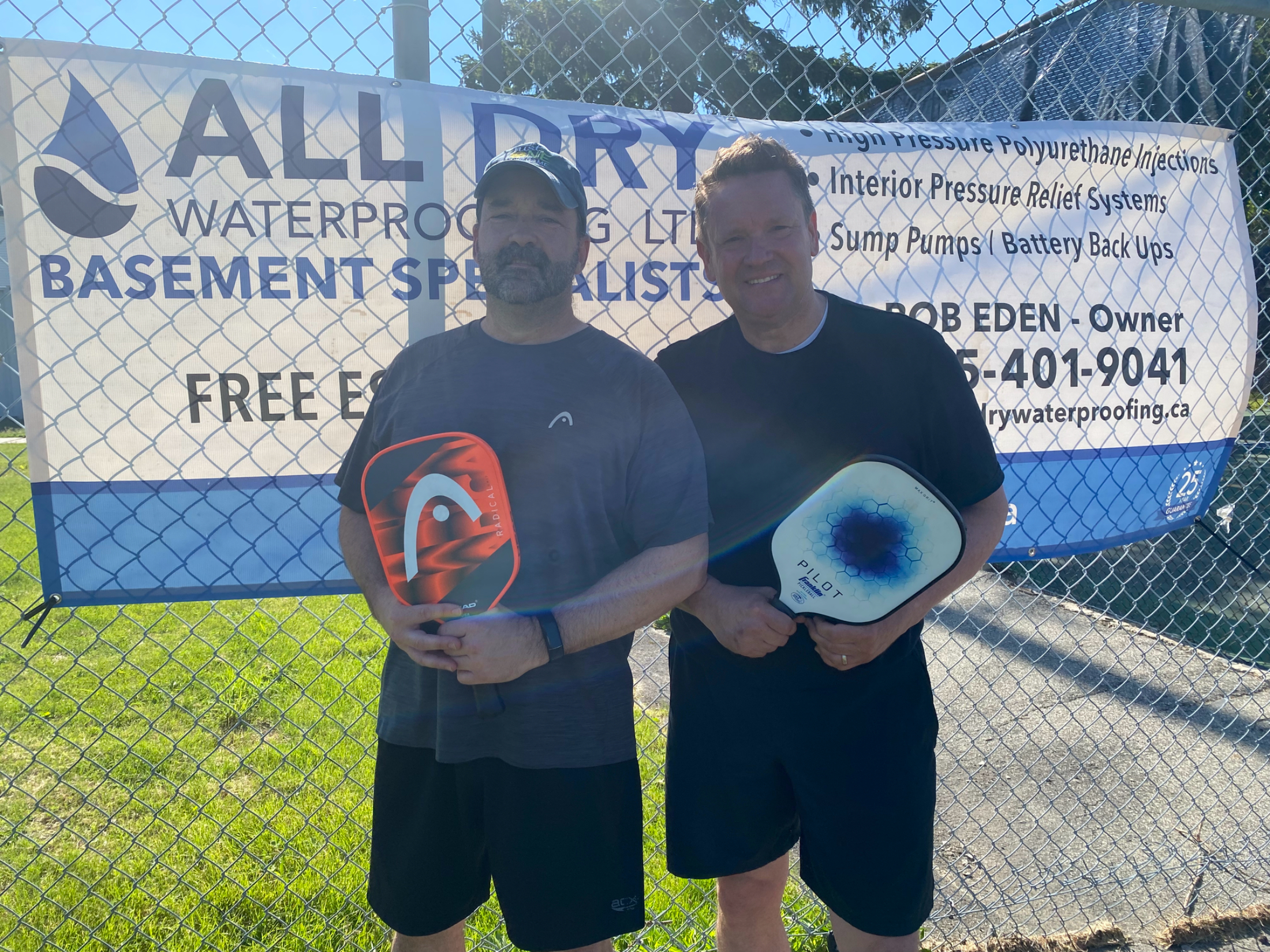
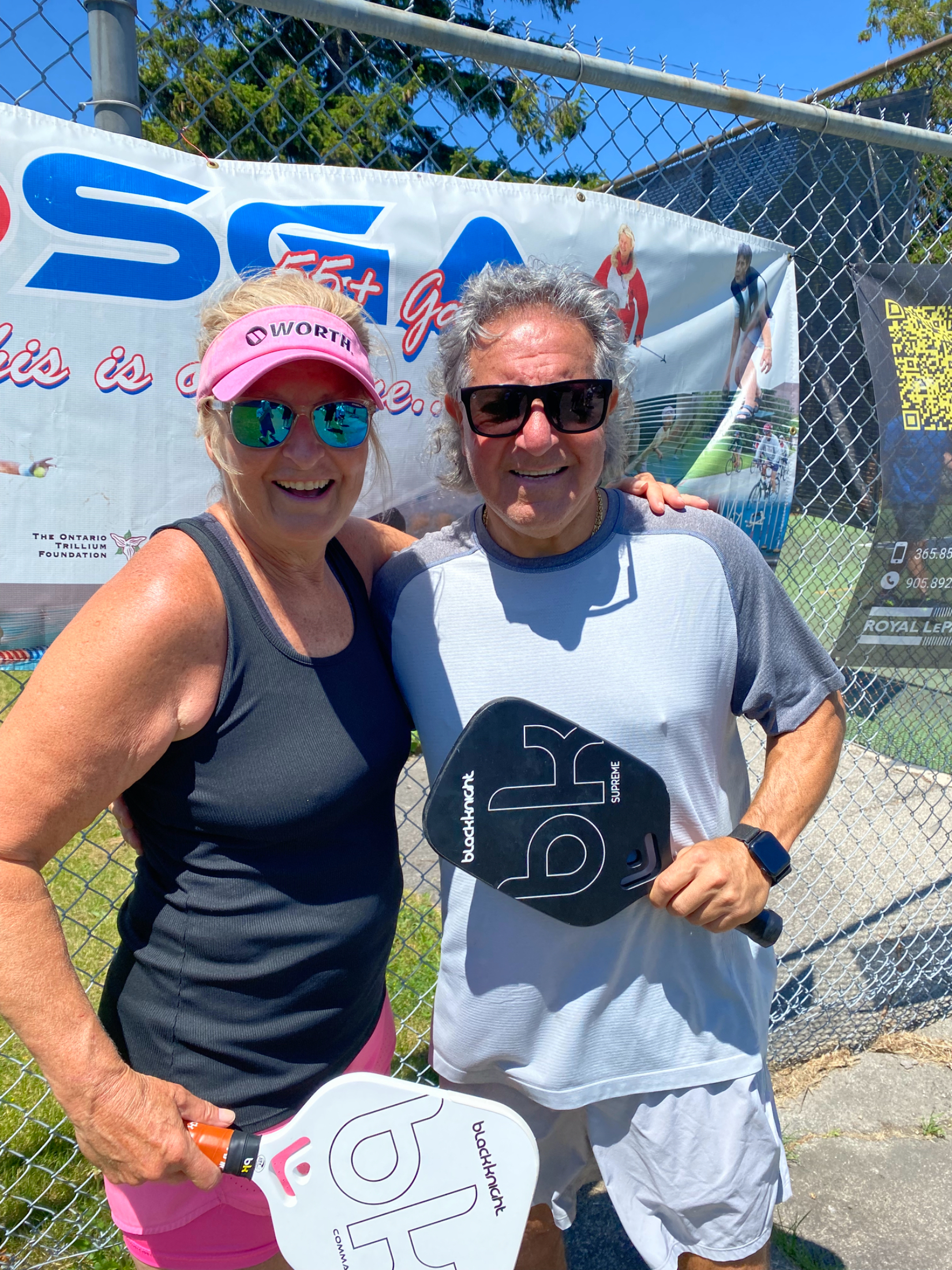
Over 110 players took part in the 3 day fun & informal tournament that Graham Long conducts annually at the Port Colborne Tennis Club. This time they were originally scheduled for June 5, 6 and 7. However the weather played a bit of a spoilsport on June 6 and the Mixed Doubles events were moved to June 13, 2026.

Thanks to all the sponsors for providing the prizes, food and drinks. 

The list of our sponsors are below.

Thanks to all the players & those that helped out including; Marg R, Winnie Z, Mike G, Dave A, Rob E, Ruben M, Edwin M, Ryan/ Alison H, Stephanie H and Graham D.

Here are the winners.

55+ Men 3.0-3.9

  • Gold-John S/Shane A 

  • Silver-Wally D/Graham L

  • Bronze-Mike G/Rob E

55+ Women 3.0-3.5

  • Gold -Laureen T/Wendy V

  • Silver-Janice H/Wendy L

  • Bronze-Marilyn S/Rosalie F

55+ Women 3.5-3.9

  • Gold -Tina C/Nancy K

  • Silver-Heather H/Darlene N

  • Bronze-Karin G/Anne K

<55 Men 3.0-3.5

  • Gold-Craig I/Shahriar B

  • Silver-Mushfique A/Mohtariz I

  • Bronze-Braden G/Mario G 

<55 Women 3.5-3.9

  • Gold - Wincey L/Celine R

  • Silver-Sarah B/Karen C 

  • Bronze-Alison H/Ashley B

<55 Men 3.5-3.9

  • Gold -Shawn R/Deryk V

  • Silver-Scott H/Brad B

  • Bronze-Aliq H/Namneet D

Men 4.0+

  • Gold -Cavanaugh C/Vaughn N

  • Silver-Ken K/Francis D

  • Bronze-Al K/Geoff G

<55 Mixed 3.5-3.9

  • Gold -Charlene D/Nick D

  • Silver-Maria A/Deryk V

  • Bronze-Celine R/Aiden D

55+ Mixed 3.5-3.9

  • Gold -Sarah B/Hal E

  • Silver-Diane B/David C

  • Bronze-Darlene N/Tony M

Mixed 4.0

  • Gold -Winnie Z/Mu X

  • Silver-Sherri V/Ken K

  • Bronze-Steinunn P/Nik P

Mixed 3.0-3.5

  • Gold -Marilyn S/Bruce S

  • Silver-Janice H/Rusty S

  • Bronze-Cyndi F/Ken S


Read

Niagara ‘s Pickleball Community Rallies for a Great Cause at St. Catharines Curling Club

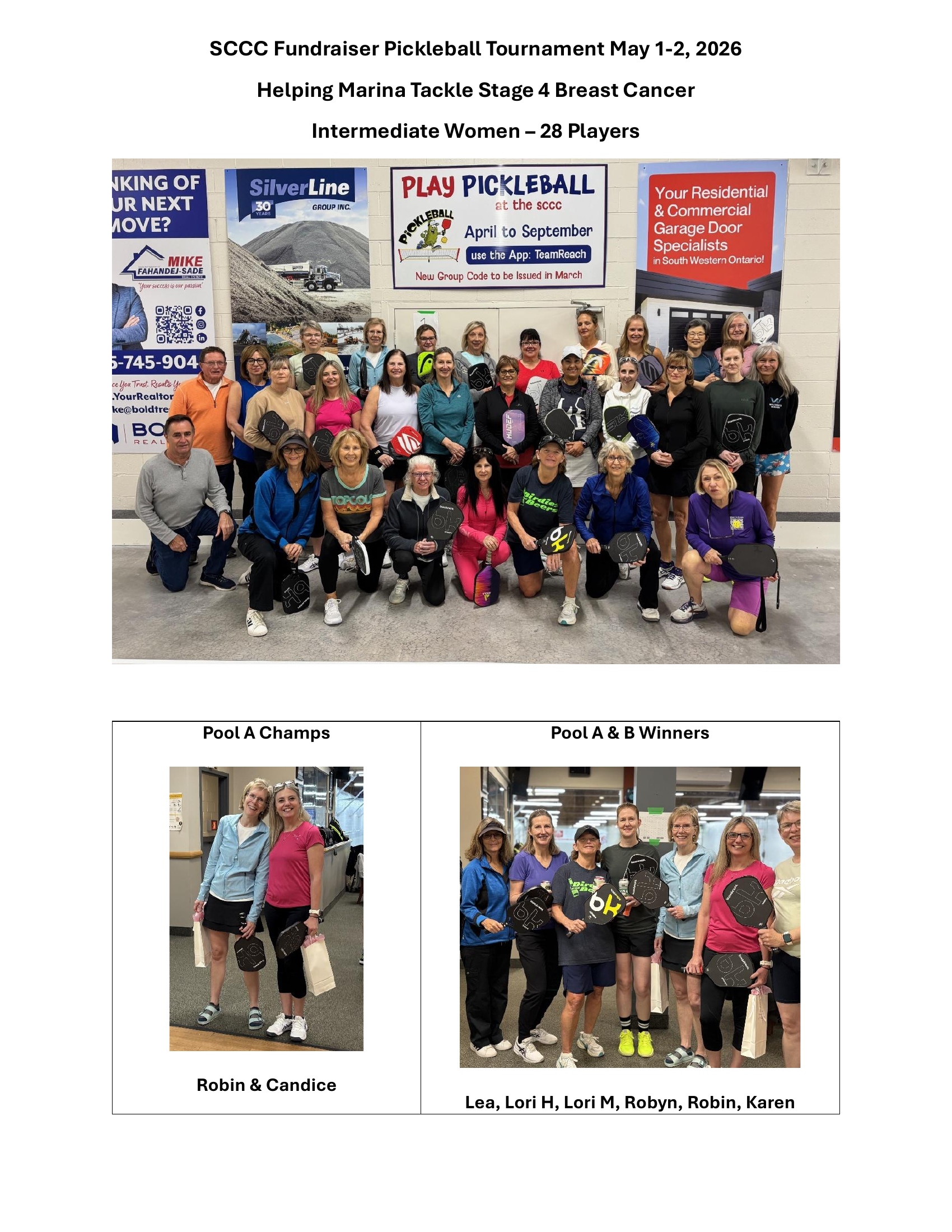
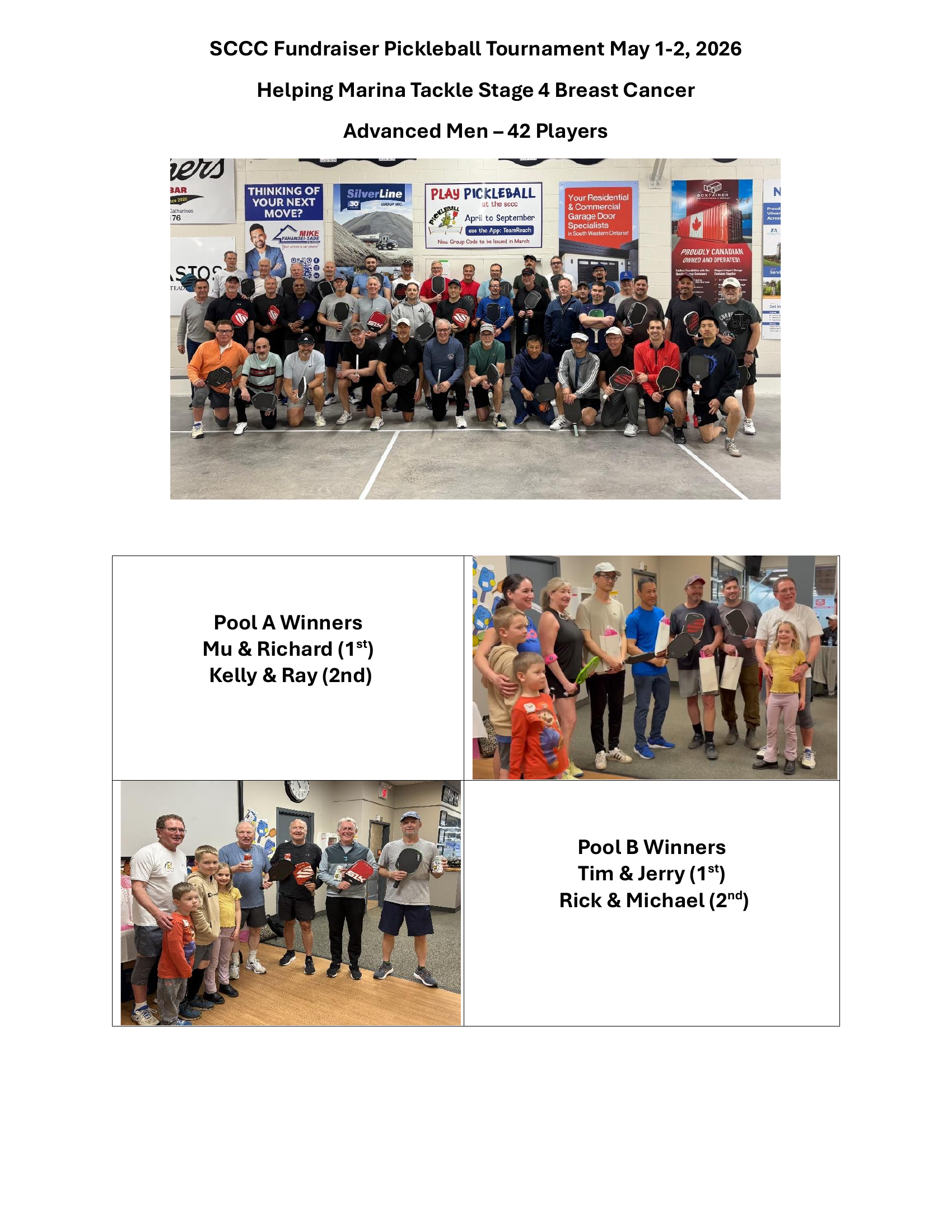
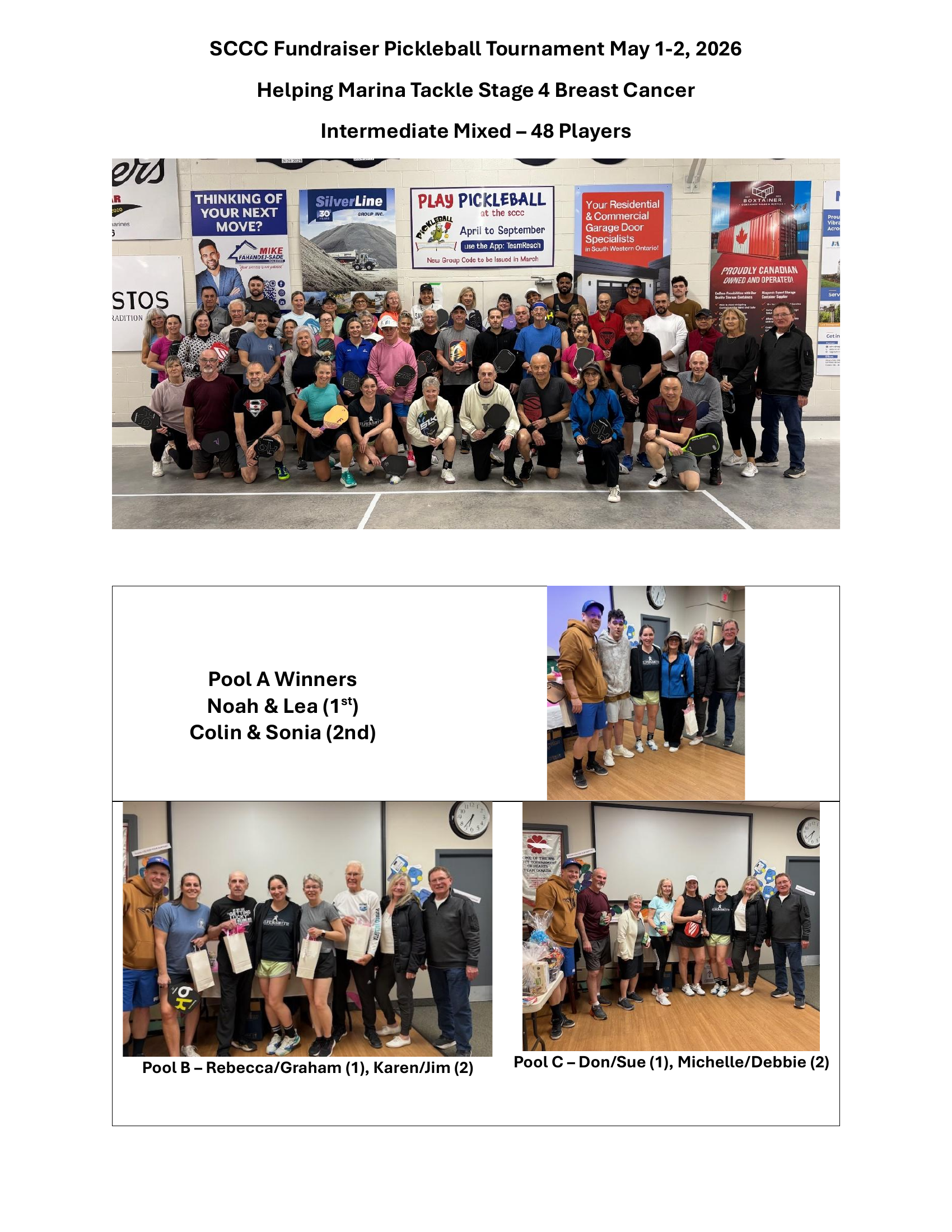
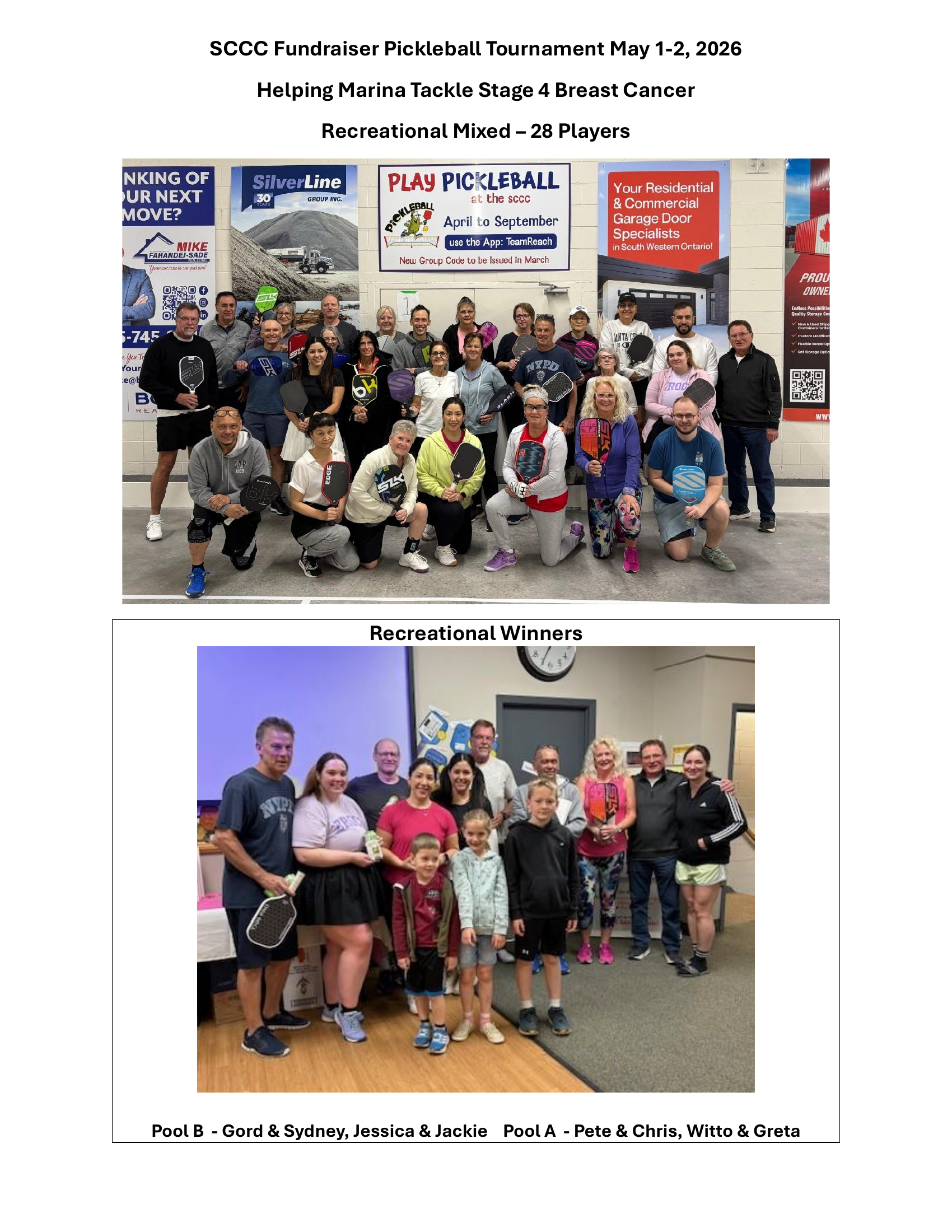
The St. Catharines Curling Club was filled with energy, competition, and community spirit on May 1 and 2 as players gathered for the SCCC Fundraiser Pickleball Tournament in support of one of our own players and her battle with Stage 4 breast cancer.

The two-day event welcomed players across multiple divisions, including Recreational, Intermediate, and Advanced categories. More than 200 participants took part throughout the weekend, creating a fantastic atmosphere both on and off the courts. Tournament divisions included Intermediate Women (28 players), Advanced Women (22 players), Advanced Men (42 players), Intermediate Mixed (48 players), Advanced Mixed (40 players), and Recreational Mixed (28 players).

While the tournament featured plenty of exciting matches and impressive performances, the real highlight was the incredible support shown for Marina and her family. Players, volunteers, sponsors, and spectators came together to raise funds and demonstrate the strength of the Niagara pickleball community.

Events like this showcase what makes pickleball special. It is more than a sport. It brings people together, creates lasting friendships, and provides an opportunity to support one another when it matters most.

A heartfelt thank you goes out to the organizers, volunteers, sponsors, and every participant who helped make this fundraiser a success. The generosity and community spirit displayed throughout the weekend were truly inspiring.

As both a pickleball enthusiast and proud member of the Niagara community, it was wonderful to see so many people come together for such an important cause. This tournament was a powerful reminder of the positive impact a community can make when it rallies around one of its own.

Read

April 2026: What the Numbers Are Really Saying Across Niagara & Hamilton

The Niagara and Hamilton real estate market is not crashing. It is not booming either.

What we are seeing is something more nuanced — a market that is becoming hyper-local, highly price-sensitive, and increasingly strategic for both buyers and sellers. I recently put together an April 2026 Market Pulse report looking at residential real estate activity across Niagara, Hamilton, Haldimand, and surrounding communities. The goal was simple: cut through the noise and focus on what actually matters.

A few trends stood out immediately.

Inventory Is Tightening

Year-to-date listing volume across Niagara is down 12.8%. Sellers are hesitating in some areas, and that reduced supply is shaping buyer behaviour. Port Colborne, Lincoln, Pelham, and Stoney Creek all saw notable pullbacks in new listings. In Port Colborne alone, listings dropped 27% year-over-year.

Less inventory does not automatically mean bidding wars. It does mean that well-priced homes in desirable pockets are still attracting serious attention.

Buyers Finally Have More Breathing Room

The average sale price across Niagara now sits around $626,000, down roughly 8.3% year-to-date. For many buyers, especially first-time buyers, that shift matters.

Communities like Welland and St. Catharines continue to offer some of the strongest entry points in the region, with average prices around the mid-$500s. These markets are attracting buyers who were previously priced out during the peak years. At the same time, buyers are gaining more negotiation power in areas with higher inventory levels.

Niagara-on-the-Lake currently sits around 12 months of inventory. Fort Erie is closer to 8 months. Those conditions tend to favour patient buyers willing to negotiate strategically.

Sellers Are Still Holding Strong on Price

One of the more interesting parts of the report was the sale-price-to-list-price ratio. Even with homes spending longer on market — approximately 46 days regionally — sellers are still achieving around 97% of asking price on average.

In Hamilton, Stoney Creek, and Glenbrook, properties are still trading close to 98% of list price.

The takeaway?

The market is rewarding accurate pricing. Homes that enter the market realistically are still moving. Overpriced listings are sitting longer and chasing reductions later.

The Market Is No Longer Moving as One Region

This may be the biggest shift happening right now. Different municipalities are behaving very differently.

West Lincoln stood out as one of the fastest-moving premium markets despite average prices near the $1 million mark. Pelham and Niagara-on-the-Lake remain premium lifestyle-driven markets, though they require more patience and longer marketing timelines.

Meanwhile, Welland continues showing strong velocity in the more affordable segment. This is why broad headlines about “the market” often miss the point. Real estate in 2026 is increasingly local, street-by-street, and price-band specific.

So What Does This Mean?

If You’re Buying:

You likely have more leverage, more choice, and more time than buyers had a few years ago. That creates opportunity — especially in higher inventory zones.

If You’re Selling:

Preparation and pricing matter more than ever. Buyers are informed, cautious, and comparing everything. The right launch strategy still makes a major difference.

If You’re Watching From the Sidelines:

This market rewards understanding over emotion. The best decisions are usually made by people who study the local trends instead of reacting to headlines. I’ve attached the full April 2026 Market Pulse report here if you’d like to explore the numbers in more detail.

If you want to discuss how these trends relate to your neighbourhood, property type, or future plans, feel free to reach out anytime.

Read
This website may only be used by consumers that have a bona fide interest in the purchase, sale, or lease of real estate of the type being offered via the website. The data relating to real estate on this website comes in part from the MLS® Reciprocity program of the PropTx MLS®. The data is deemed reliable but is not guaranteed to be accurate.